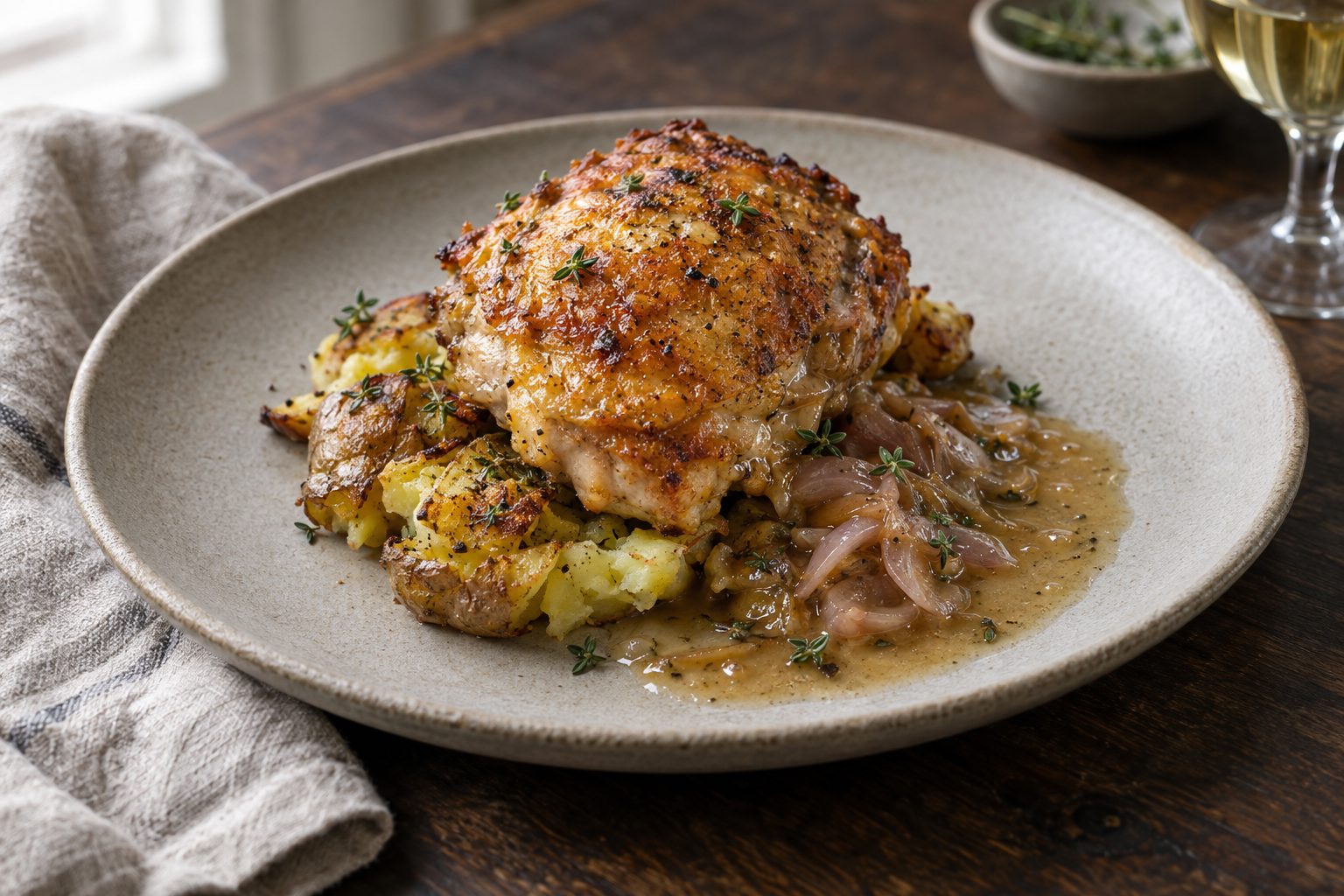
Mise en place is not a restaurant trick
Why the twelve minutes before you turn on the stove decide how dinner goes, and how to prep like a cook at home.
By Jarrett Kahler
Every bad night I've had on a line started the same way: I turned on the heat before I was ready. The pan got hot while I was still looking for the shallots. The butter browned while I was still mincing. By the time I caught up, I was cooking the mistakes instead of the food.
Home kitchens run the same way, just with lower stakes and fewer witnesses. The onion is sweating while you're still peeling garlic. The recipe says "add the stock" and the stock is still in the carton in the fridge. You're not a bad cook. You just started cooking before you started.
What mise en place actually is
The French means "put in place." In a restaurant it's the hour or three before service when every cook preps every component of every dish they're responsible for, portions it, labels it, and arranges it within arm's reach of the station. Then service happens and nobody prepares anything; they just cook.
At home you don't need three hours. You need about twelve minutes, and you need to do them before the stove is on.
The home version
- Read the recipe once, all the way through. Not to memorize it. To find out what's going to happen fast. Pan sauces, stir-fries, and anything with "immediately" in it need everything cut before the heat.
- Get everything out. Every ingredient, on the counter, including the salt. If it's in the fridge, you'll be opening the fridge with a spatula in your hand later.
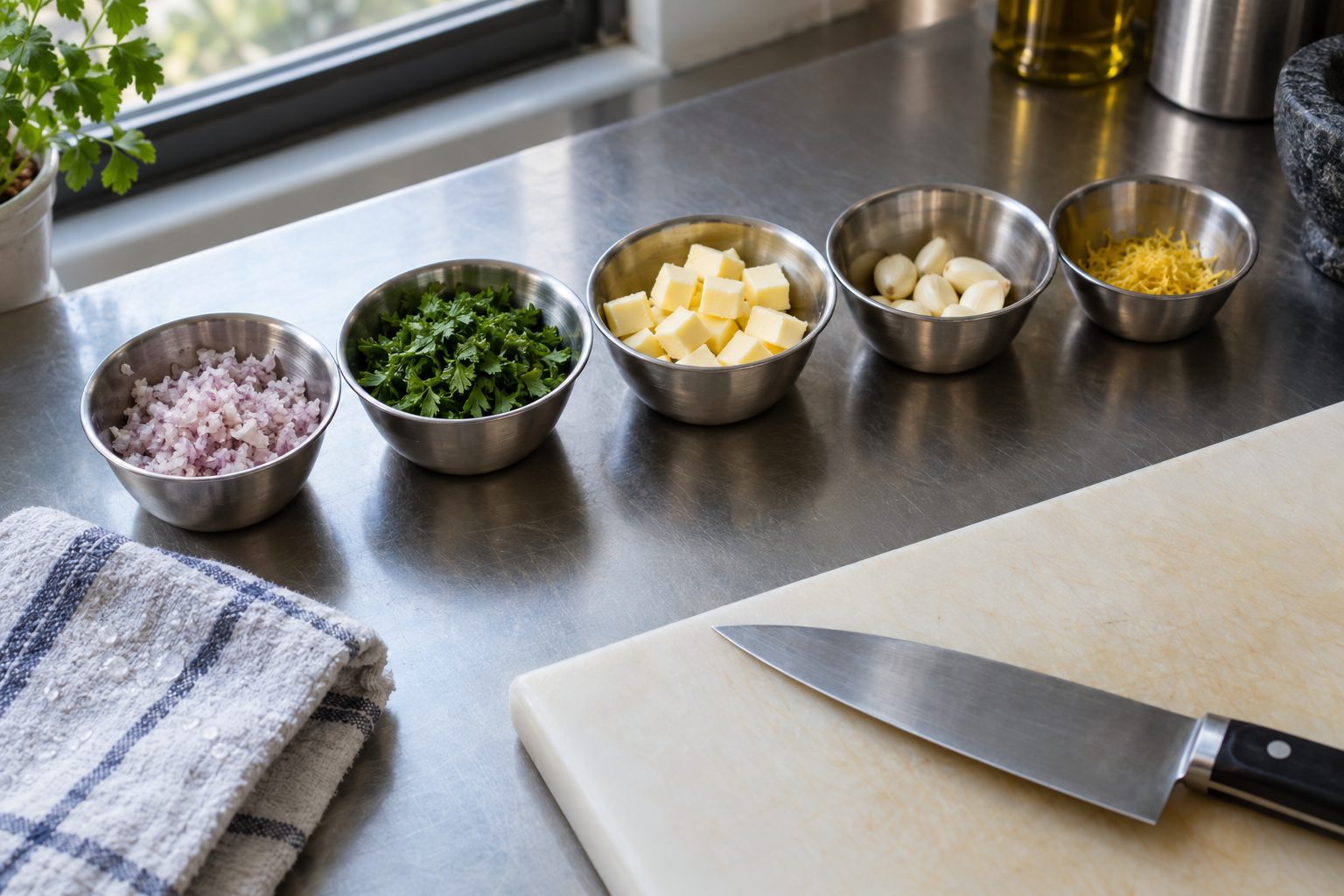
- Cut everything. All of it. Into small bowls, ramekins, or piles on the board grouped by when they go in the pan. Shallot and thyme together. Butter cubed and back in the fridge.
- Measure the liquids. Wine in a cup. Stock in a cup. The two minutes a sauce takes is not the time to find a measuring cup.
- Set up the landing zone. A plate for the cooked protein. A spoon rest. A towel. Where's the finished dish going to go? Decide now.
- Then turn on the heat.
Why it matters more than technique
I can teach anyone to make a pan sauce in one class. I can't teach anyone to make a pan sauce while they're also looking for the Dijon. Half of what looks like skill in a professional kitchen is just the absence of scrambling. The cook isn't faster than you. The cook is never surprised.
It also changes how cooking feels. With everything in place, the four minutes at the stove are calm. You can watch the pan, which is the whole job. You can taste. You notice when the shallots smell sweet instead of discovering they've burned.
The cook isn't faster than you. The cook is never surprised.
What you need
A big cutting board, a bench scraper to move things from board to bowl, and a handful of small bowls. Deli containers are what restaurants use; a set of ramekins works fine. That's it. The rest is habit, and the habit takes about three dinners to form.
In the January class the first fifteen minutes are mise en place, together, before anybody turns on a burner. If that sounds slow, that's exactly why you should come.
Free guide
The ten tools I'd buy before any gadget.
A short, opinionated guide to outfitting a home kitchen the way a cook would: what to spend on, what to skip, and the one pan that does most of the work. You'll also hear from me when a class opens, about once a week at most.
Thanks, there. Check your inbox.
The guide is on its way. While you wait, the Essentials page walks through everything in it.